


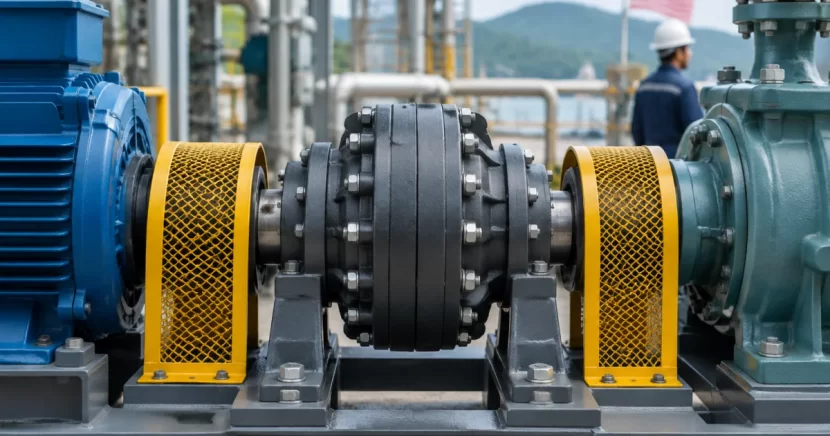
For maintenance and procurement teams, the hardest part of replacing a hydraulic fluid coupling is rarely the purchase approval—it’s confirming the exact replacement when the line is down, the nameplate is dirty, and the machine has been modified over the years. If you are sourcing a Transfuild coupling Malaysia replacement locally, the quickest path is to treat the request like a technical identification exercise, not a generic “quote please”.
This article focuses on three things you care about at the BOFU stage: what distributor support should look like, how to think about stock availability and lead time without assumptions, and what information to include so the distributor can match the right Transfluid unit (or compatible spare parts) the first time.
What a local Transfluid distributor should support (beyond selling a coupling)
A hydraulic fluid coupling sits between the motor and driven equipment to smooth start-up, limit peak torque, and help protect the drive train. Because it interfaces with your motor shaft, hub/bore, baseplate alignment, and guarding, replacing it is not the same as ordering a commodity component.
In Malaysia, a distributor who specializes in power transmission should be able to support your replacement request in practical ways:
- Model identification support: helping you interpret a nameplate, casting marks, or series designation and match it to an equivalent product family.
- Fit and interface checking: reviewing bore/shaft dimensions, keyways, hubs, and space constraints so the coupling physically fits your installation.
- Application sanity-check: confirming the driven load type (conveyor, crusher, fan, pump, mixer, etc.), typical start frequency, and duty so the selection is not under- or over-sized.
- Parts and accessory guidance: identifying if you need hubs, guards, seals, fasteners, or other coupling-related items as part of the replacement.
- Cross-checking the upstream/downstream drivetrain: especially where a motor, gear motor, gear reducer, or brake motor is part of the same drive package and may influence sizing and installation details.
This kind of support is particularly useful when the coupling was originally supplied as part of a larger assembly such as a gear motor coupled with a fluid coupling, or when the current motor has been replaced with a different frame size. Even if you are “already decided” on a fluid coupling, the right replacement is the one that fits, aligns, and delivers the expected soft-start behavior in your real operating conditions.
How stock availability really works (and how to ask the right questions)
Stock availability is not just “in stock / out of stock”. For fluid couplings, the details that affect delivery speed often include whether the distributor holds the same series, whether matching hubs are available, and whether your installation needs a specific bore, keyway, or configuration that may not be on-the-shelf.
When you ask about stock, try to separate your questions into three buckets:
- Coupling body availability: Is the correct Transfluid series/size available locally, or will it be sourced in?
- Interface parts availability: Are the correct hubs/bushings, keys, and fasteners available for your motor and driven shaft sizes?
- Critical-change items: Are there any changes required (for example, hub type, bore machining, or spacing) that could affect turnaround time?
It also helps to ask the distributor to confirm what constitutes “ready to install.” A coupling may be available, but if the hubs need machining or the bore/keyway must match your shaft exactly, the realistic delivery window can change. If your plant has machine-shop capability, mention it; if you require a supply-and-fit-ready unit, say so upfront.
For procurement, the practical objective is minimizing downtime risk. For maintenance, it’s avoiding the scenario where the coupling arrives but cannot be installed because one small interface detail was assumed.
What to include in a replacement request (a checklist that reduces back-and-forth)
A strong request email or RFQ gives the distributor enough information to positively identify the coupling and validate fit. If you only send “need Transfluid coupling” without the installation details, the distributor must guess, and that guesswork costs time.
1) Identification details (what the existing coupling is)
- Photos: clear photos of the nameplate (if present), the full coupling installed, and both sides showing hubs/bolts/guarding clearance. Take photos before cleaning if cleaning could remove markings—then a second set after wiping down.
- Any marking you can read: series name, size designation, part numbers, casting marks, or the word “Transfluid” on the housing.
- Approximate dimensions when the nameplate cannot be read: outside diameter, overall length, and bolt circle (if visible). Even rough measurements help narrow the family.
2) Fit details (what must match your shafts and space)
- Motor shaft diameter and keyway (and whether it is metric or inch-based).
- Driven shaft diameter and keyway (or input shaft if connected to a gear reducer).
- Motor frame and mounting where known (helps validate shaft height and guard clearance, and is useful if your team is also sourcing an AC motor Malaysia replacement as part of the same shutdown).
- Available axial space between motor and driven equipment, plus any known spacer requirement.
- Guarding constraints: if the coupling is in a tight guard, share internal clearance measurements or photos.
3) Application details (what the coupling is doing)
- Driven equipment type: conveyor, fan, pump, crusher, mixer, mill, etc.
- Start method: DOL, star-delta, soft starter, VFD (even with VFD, couplings are sometimes used for shock reduction in specific loads).
- Start frequency: occasional starts vs. frequent cycling (e.g., material handling and processing lines).
- Load behavior: heavy start, high inertia, jam risk, or variable material load.
Even if you do not have perfect data, include what you know and label unknowns. A distributor can still guide the selection using practical, experience-based checks.
How to avoid common replacement mistakes (and what to do when data is missing)
Most wrong orders happen due to one of these avoidable issues:
- Assuming “same motor kW = same coupling”: Coupling sizing depends on start characteristics and load inertia, not just motor power.
- Ignoring hub/shaft interface: A coupling body may be correct but hubs/bore/keyway mismatch can stop installation.
- Not accounting for prior modifications: Motor upgrades, baseplate changes, or a swapped gear reducer can alter required dimensions.
- Confusing product family names: Different coupling series can look similar in photos; nameplate confirmation matters.
If the coupling is damaged and the nameplate is missing, you still have options. Provide the best available measurements, photographs, and the motor/driven shaft data. If your plant has a standard spares list, include it even if it might be outdated—distributors can use it as a starting clue. In some cases, the fastest route is verifying the coupling series from the machine documentation or OEM drawings, then validating the current installation dimensions on-site.
Also, consider the broader drivetrain when planning the replacement. If the drive includes a gear motor, helical gear reducer, or other power transmission element, a distributor specializing in motors and gear systems can help ensure the coupling choice aligns with the overall package—especially in heavy-duty installations where shock loads can affect gear reducer life.
Choosing the right contact route: product pages and clear “next steps”
For a faster match, route your enquiry through pages that already narrow down the product family. If you know you need Transfluid couplings but aren’t sure which specific model, start from a category-level page and provide your details in one message.
- Browse Transfluid couplings to orient your team around available product groupings before sending the request.
- If your installation uses an integrated package, review Gear Motor Couple With Fluid Coupling so you can describe your drive layout accurately.
- When you already know the series, you can reference specific product families such as Transfluid Coupling Ek, Transfluid Coupling Krg, or Transfluid Coupling Ksd in your enquiry (even if it is only a best guess based on markings or previous purchase records).
In your message subject line, be specific. Examples that typically get quicker technical triage include:
- “Urgent replacement: Transfluid fluid coupling for conveyor drive – photos + shaft sizes attached”
- “Confirm equivalent for existing Transfluid coupling – nameplate unclear, dimensions provided”
- “Stock check + lead time: coupling + hubs required, motor shaft 38 mm, driven shaft 45 mm”
This approach reduces the time to the first useful reply because the distributor can immediately route the enquiry to someone who handles hydraulic coupling selection and interface checking, instead of treating it as a generic spare-part order.
Conclusion: a “right-first-time” replacement is mostly about the request quality
Sourcing a fluid coupling locally is meant to simplify downtime response—but only if the identification and fit checks happen early. For teams searching for Transfuild coupling Malaysia support, the most effective strategy is to provide photos, shaft and hub details, and a short description of the driven load in a single request. That enables a distributor to confirm the correct Transfluid series/size, advise on any hubs or accessories required, and give a realistic view of stock availability and lead time.
If you treat the replacement request as a technical brief rather than a one-line RFQ, you avoid the most common failure mode: receiving a coupling that is “close” but cannot be installed. The result is fewer clarifications, faster sourcing decisions, and a smoother restart of the line.
Frequently Asked Questions
What information do I need to request a Transfluid fluid coupling replacement in Malaysia?
Send clear photos (nameplate and installed views), any visible series/size markings, motor and driven shaft diameters with keyway details, available axial space, and a short note about the driven equipment (e.g., conveyor, fan, crusher) and how often it starts.
If the nameplate is unreadable, can a distributor still identify the correct coupling?
Usually yes. Provide multiple photos, rough overall dimensions (outside diameter and length), shaft sizes, and any purchase history or spares list references. These details help narrow the coupling family and validate fit before ordering.
Does “in stock” mean the coupling is ready to install?
Not always. A coupling body may be available, but hubs, bore/keyway matching, or other interface items may still be needed. Ask the distributor to confirm whether hubs and any required machining or accessories are included for a ready-to-install supply.
Can I size a replacement fluid coupling using only motor kW?
Motor power is a starting point, but it is not sufficient by itself. The correct selection depends on load type, start characteristics, inertia, and duty cycle. Sharing the application and start method helps prevent under- or over-sizing.
What’s the fastest way to reduce back-and-forth during an urgent breakdown?
Combine everything in one message: photos, shaft and keyway data, basic dimensions, and the driven equipment description. If you suspect a specific series, reference it (for example EK, KRG, or KSD) so the distributor can immediately check the closest match and stock options.
Need help matching the right Transfluid coupling replacement?
Cetrade (M) Sdn Bhd is a Malaysia-based power transmission specialist in Penang, supplying Transfluid couplings and related drivetrain components such as electric motors, gear motors, gear reducers, brake motors, and other industrial power transmission products. If you share your coupling photos, shaft sizes, and application details, our team can help you confirm the suitable configuration and advise on stock or sourcing options for your replacement timeline.
Disclaimer
We hope you find this article helpful and informative. Our content is intended for general informational purposes only and should not be considered as professional advice or a comprehensive representation of all services offered by Cetrade (M) Sdn. Bhd.
For personalized advice, please consult with a professional or contact us directly. While we strive for accuracy and completeness in our blog posts, we cannot guarantee they are error-free. Cetrade (M) Sdn. Bhd. assumes no responsibility for any errors or omissions.